Dr. Erik Hormann ☕️
Dr. Erik Hormann
(he/him)

Lecturer in Mathematics

I am a Lecturer in Mathematics at James Cook University Singapore. My research focuses on network science, stochastic processes, and statistical mechanics, with particular interests in random walks on complex networks, network dynamics, and network coarse-graining. I am also interested in mathematical education and the development of new approaches to university mathematics assessment.

Experience

Lecturer in Mathematics

James Cook University Singapore

Lecturer in Mathematics and Mathematics Convenor for the Singapore campus.

University Teacher

University of Edinburgh

Lectured large undergraduate classes and contributed to the School of Mathematics Pre-Honours Curriculum Review.

Education

DPhil in Mathematics

University of Oxford

Thesis: Applications of Random Walks on Complex Networks.

MSc Applied Mathematics

La Sapienza, University of Rome

MSc Physics

La Sapienza, University of Rome

BSc Physics

La Sapienza, University of Rome

Research

My research lies at the intersection of network science, stochastic processes, and statistical mechanics. I study how random walks and dynamical processes interact with the structure of complex networks, with particular interests in network coarse-graining, network inference, and the preservation of dynamical properties under compression.

I also work on mathematical education, with a focus on knowledge representation in automated assessment, modelling of mathematical competence, and the use of technology to support learning in university mathematics.

Selected Publications

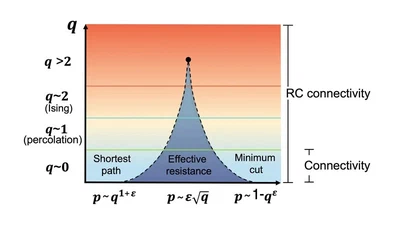
Unifying network connectivity from geodesics to random walks via the random cluster model

Connectivity is a fundamental concept in network science, characterizing how interactions propagate through indirect pathways. While numerous connectivity metrics exist, such as …
Approximation for return time distributions of random walks on sparse networks

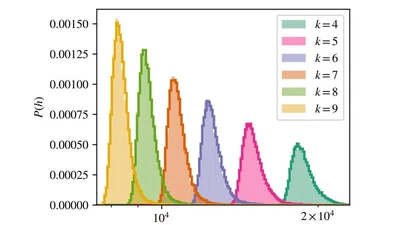
We propose an approximation for the first return time distribution of random walks on undirected networks. We combine a message-passing solution with a mean-field approximation to …

Cozzarelli Prize Coarse-graining Directed Networks with Ergodic Sets Preserving Diffusive Dynamics featured image

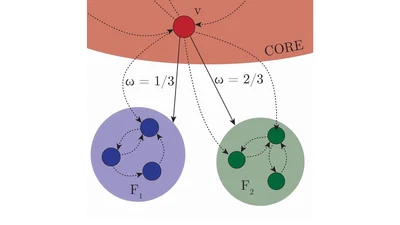
Coarse-graining Directed Networks with Ergodic Sets Preserving Diffusive Dynamics

In this paper, we introduce ergodic sets, subsets of nodes of the networks that are dynamically disjoint from the rest of the network (i.e. that can never be reached or left …

Cozzarelli Prize Optical computation of a spin glass dynamics with tunable complexity featured image

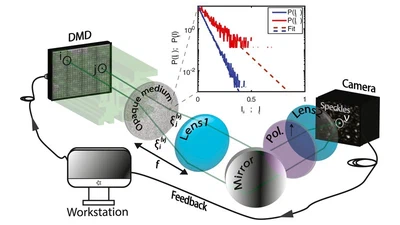
Optical computation of a spin glass dynamics with tunable complexity

Spin glasses (SGs) are paradigmatic models for physical, computer science, biological, and social systems. The problem of studying the dynamics for SG models is nondetermistic …

Teaching & Education
Alongside my research, I am interested in the teaching and assessment of university mathematics. My work explores how assessment can make mathematical competence more visible, support meaningful feedback, and encourage students to engage with mathematics beyond simply accumulating marks.